
Weekly goal setting systems
A blank calendar and three to dos!

Hello darlings –
Hello from Portland, Oregon where Kelly Clancy and I have been working for two days on two secret projects that y’all should be so so so excited about!! And we are about to host a lot of friends for our next writing retreat!(!!!!!)
Welcome back to the creating systems for an academic life series of MHAWS! Hopefully you have enjoyed (?) the previous versions of this series.
Post 1: Systems to get us started, including focus time, email management, and setting up the semester

Post 2: Systems to help us go further, including end of the day and a website refresh

Today, we are focusing on goal setting systems! Ayeyeyey you KNOW I fucking love a goal and I love a system so obviously, I have been itching to write these ones. And guess what? My systems deserve a refresh, a tidying up, a renovation, so this is the perfect time! We are going to go in order of shortest to longest (week, month, season), but I actually recommend that you carry these out in reverse order (from longest to shortest)! Why? Because I’m a wild woman who thinks that immediate plans are easier to make when you have longer term goals in mind!
As usual, the systems also live in this google doc, which you can download and make your own.
You will get one set of goal planning a week so that I can work alongside you!
Setting weekly goals:
The goal here is to institute a system that allows you to thrive and prioritize the projects that are most important to you. My way is not the only way of doing this! Here are some examples:
Scheduling every minute by Raul Pacheco-Vega (we miss you Raul!!)
Planning your week with goals, priorities and tasks
Here’s the system
Step 1: Decide when to set your goals
(Ideally you just do this one time!)
I have a reminder on my calendar on Sunday afternoons. You might want to do this on Monday morning or Friday afternoons or every seventh day after the new moon. Pick a time that works for you. Put in on your calendar or write in your planner.
Step 2: Set up your routine.
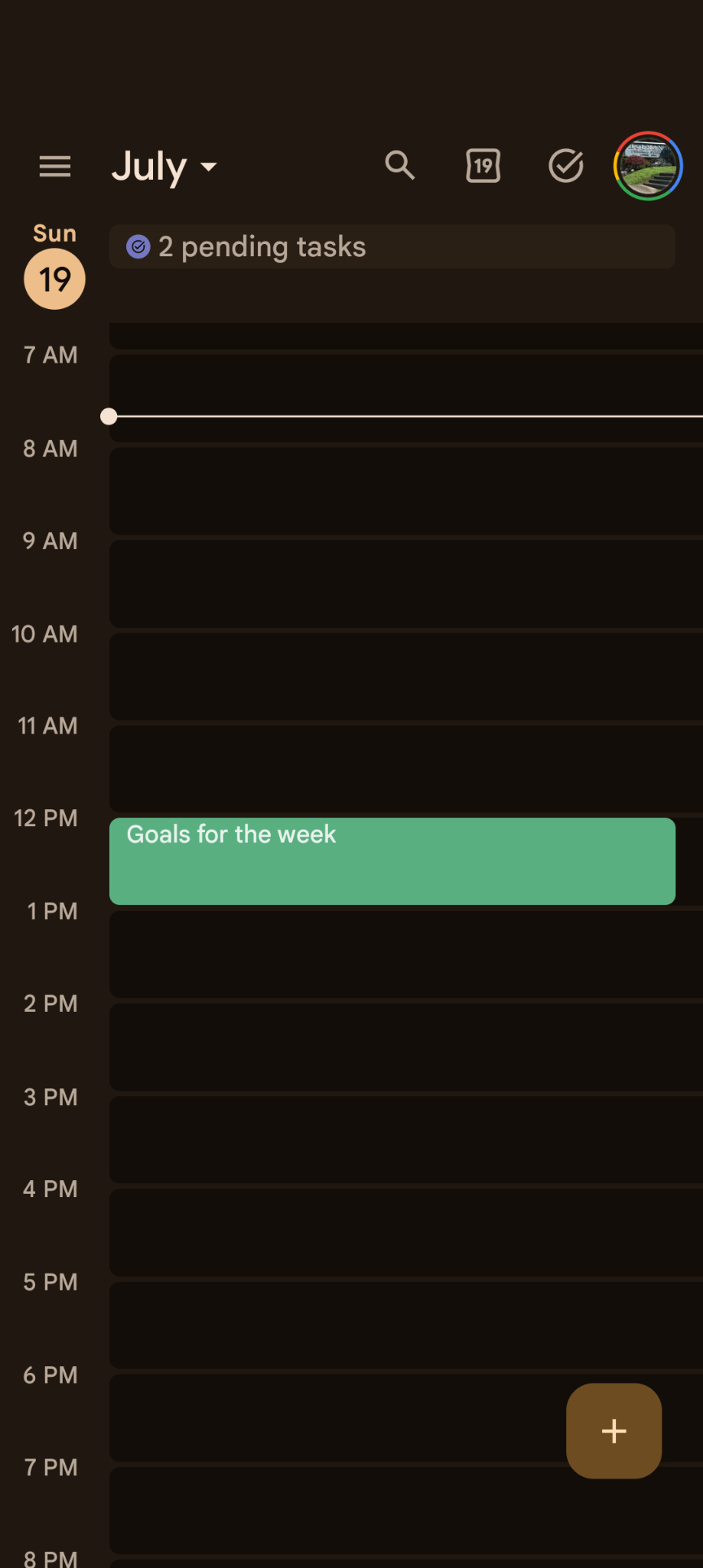
Whatever works for you – a calendar reminder, a post in your planner, an alarm, an snoozed email to yourself. Do it regularly. Actually set goals at that time every week for 15 weeks (at least!). Here’s my lil Sunday reminder (this is simple shit, friends)
Step 3: Map your commitments
What have you already said yes to in the next week? This might regular events like include standing appointments, kid drop off, or classes. It might also include one-offs like meetings scheduled a long time ago, on campus events, concerts, birthdays, and more!
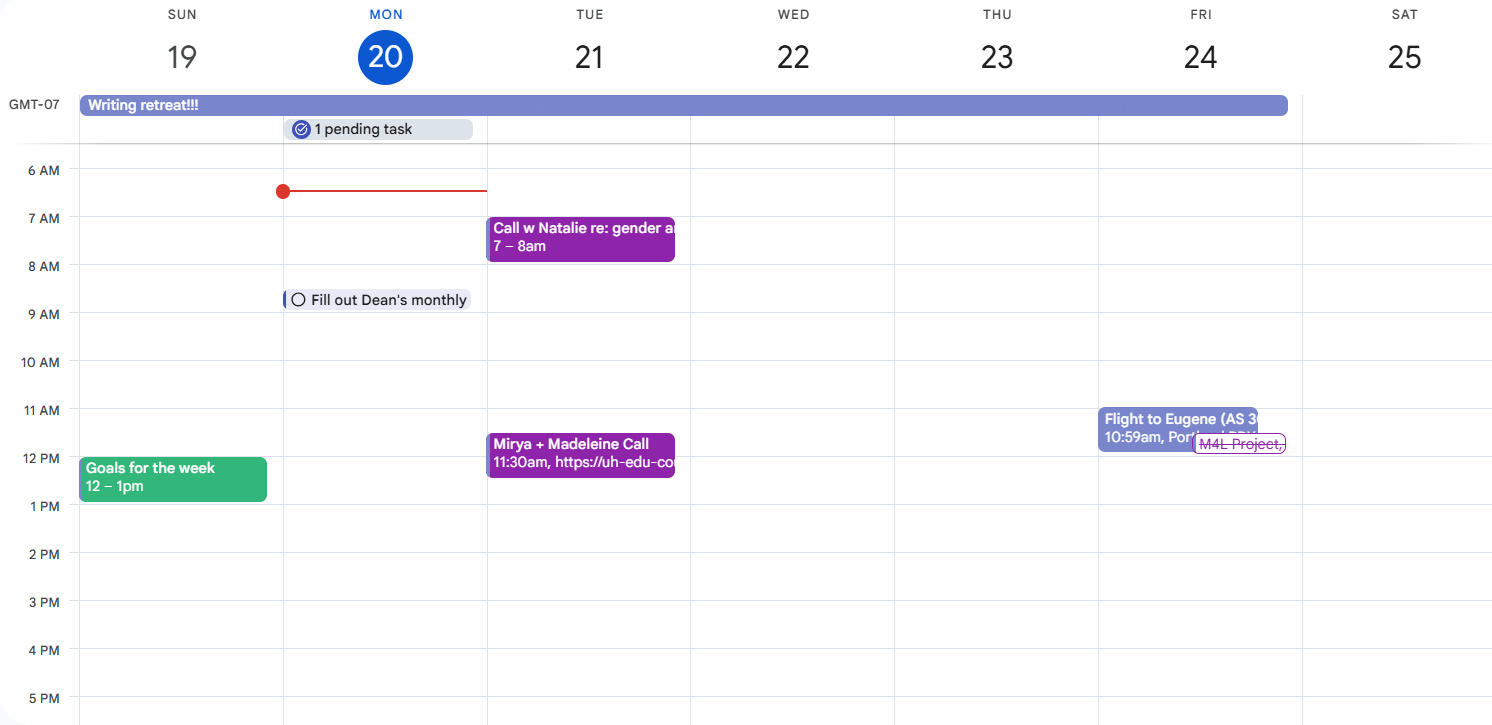
Sometimes my calendar looks like a horror story, sometimes not! (here’s a blessedly clear schedule because I’m hosting a mfing writing retreat this week!!!!)
Step 4: Add in your “must dos”
For me, during normal weeks, this is working out, walking my dog, time with my partner, seeing live music, social events, and more. These time blocks come first. They get time on my calendar before everything else is fit in.
Step 5: Assess your available time
After your commitments and your non-negotiables, how much time is actually left on your calendar?
Each block of time has a quality. For me, longer blocks of time earlier in the day are great and are for hard writing. Short blocks of time or those later in the day are for easier tasks.
Step 6: Set your goals!
Given what you know about your available time, what do you want to/ what can you get accomplished this week?
I like to try to keep it to three big goals for research each week. This is a change! I used to religiously use this planner. But it turns out that I want bigger goals – I want to tear this shit UP! And I can’t do that if I’m listing out all those small lil piddly things. Instead of keeping track of things like how many cups of water I drank on my planner, I use the todoist app on my phone.
Step 7: Fit your goals into your schedule
I use time blocking! It terrifies some people and soothes others. Don’t do it if it doesn’t work for you, do if it does, try it out if you haven’t ever thought about it!
Step 8: Audit
After your goal setting session, sit back and look at your calendar. Does it match your goals? What is missing? Did you leave a little time for whimsy? Will you eat lunch every day? Adjust as needed
Step 9: be flexible on changes!
One of the reasons that I love a white board and a google calendar (over a paper planner) is that I am very very VERY into the idea that we can revisit and revise our goals. Coauthors want to meet this week all of a sudden? Great, put it on the calendar and take something else off. An R&R comes in? AMAZING. Get after it. A rejection comes in? Fuck that noise! Drink champagne, cry a little, and make plans for how you will prove everyone wrong.
The point here is that you should be as flexible with yourself and your goals as you need to be. Don’t do well with flexibility? Cool, ignore this.
Step 10: try it again
One of the best things about this process is that each week you get a new chance to fail succeed. What went well last week? What didn’t? Where did you get overwhelmed or have too little to do? Take these into account as you change your life, one week at a time.