
Monthly goal setting systems
In good times and in bad

Hello darlings!
How the hell is everyone doing? Have you flipped the switch between big summer dreamin’ to small summer panicking yet???? I have!!!!
I’m back with another installment of “Systems Mirya thinks you need to use” – the Monthly goal setting system. The goal here (just like all the others) is to set something up so it makes your life easier, less panicky, more chill, more filled with joy, less annoying, more productive, less filled with email, more filled with big fucking thoughts, less shitty coffee, more freddo cappuccino (my current obsession!)
Today’s monthly plan builds directly on (or is built on? hmm) the weekly plan guidelines.

As usual, the systems also live in this google doc, which you can download and make your own.
Creating a Monthly research plan
Step 1: Understand your life commitments
Start with a month calendar where you track all your important events of the year.
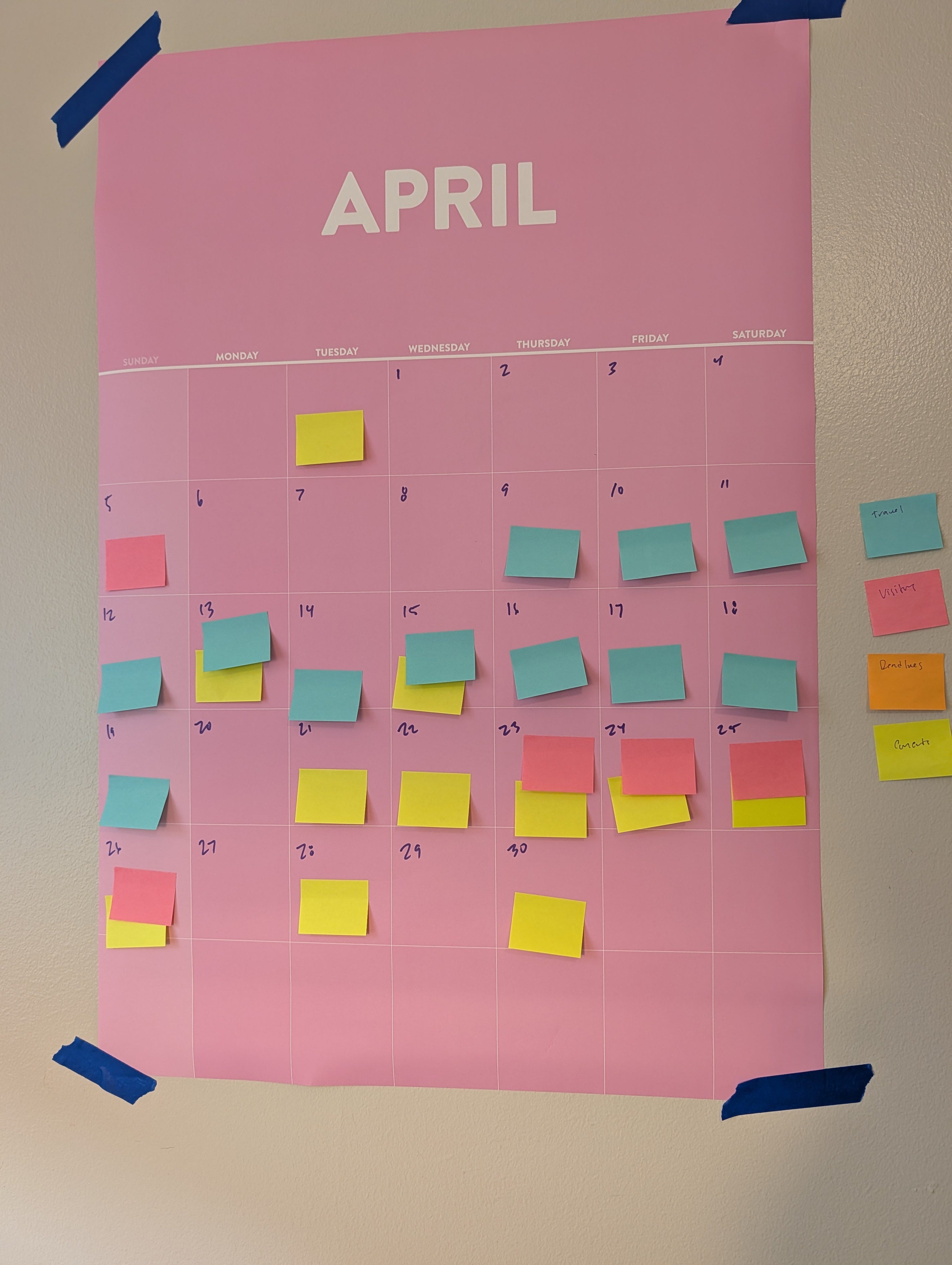
I use physical calendar where I note all my travel, events, visitors, important concerts, and deadlines. You might choose to do this electronically or in a planner, etc. This year, I purchased these adorable giant colorful calendars (#MHAWS endorsed!) and hang them on my wall across from my desk. I then use color coded post-its to track travel, deadlines, concerts, and visitors. In past years, I have used printed out calendars like this one. Your commitments might be in different categories than me – feel free to adapt to include kid responsibilities or coven nights or jail visitation schedules or whatever big things happen in your life.
Step 2: Understand your professional commitments
Write out your major commitments for the next month including R&Rs, conference papers, presentations, and deadlines.
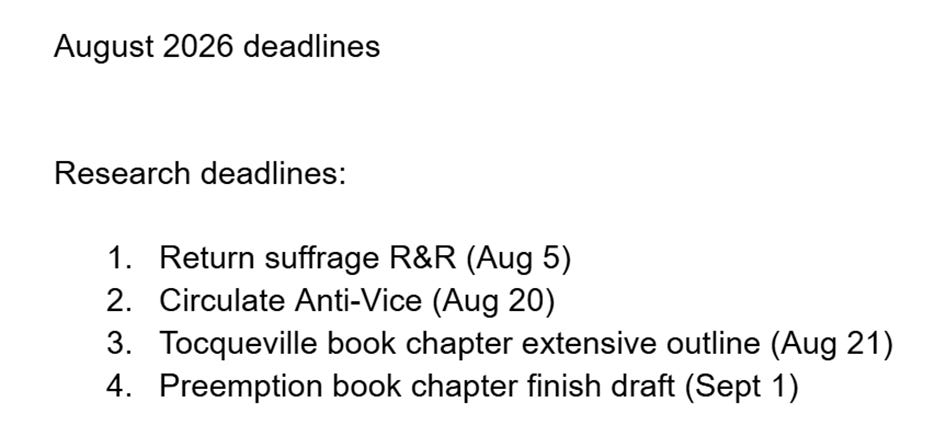
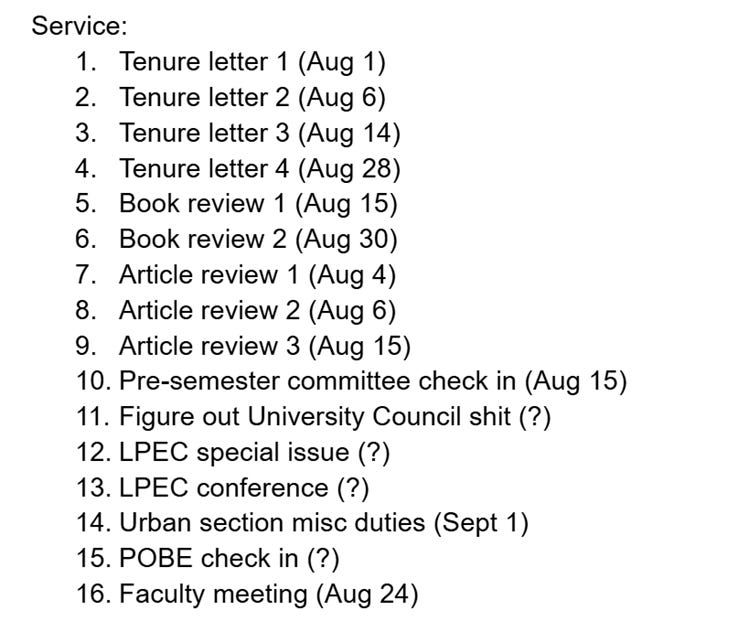
I also include big service deadlines here (tenure letters that are due, book reviews, committees, etc). After I write them out, I make sure that specific deadlines are on my calendar and that I have allocated enough time to time-consuming tasks (like tenure letters and reviews) in my calendar.
You might also do the same for teaching – what are the key deadlines, when do you need to do what, and how can you break the big tasks up into smaller tasks to make your life easier? (I do not generally teach in the fall, so I am able to skip this right now)
Step 3: Write out your additional project or project goals
What else do you want to get accomplished this month?
Here, I look at a giant list of all my projects as well as looking forward to the next several months and what else I would want to get accomplished in those months or what deadlines I have. Honestly, this is the ‘wake up call’ moment because I’m someone who works on WAY too many projects all at once. Listing them all out helps me see this and be more selective in what I work on. Generally BIG projects like books are broken down into more concrete stages and I try to list out what the outcome is for the month for each project. Here’s a snippet:
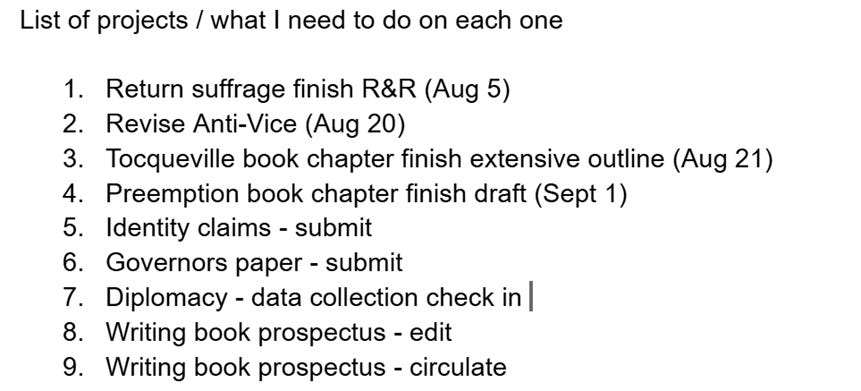
Yes, this process makes me panic. Yes every person works on a different set of projects at one time. Yes you are normal (no you are not normal).
Step 4: Prioritize that list
Which projects do you want or need to work on in the next month. I generally think of three considerations when prioritizing my to do list items:
- Is there a deadline associated with this? (conference, R&R, grant funding, etc)
- How motivated am I to work on the project (how much do I like it, how much do I think it matters for my career? (lol what even matters ever??), how much do I like working with the coauthors, what is their career status, etc)
- Where is the project in my broader pipeline? (where I try to prioritize projects at different points so I’m not trying to finish, like, 100 (okay 10!) books at once).
This year, I am trying to divide my goals into submission goals (submit article), process goals (push project XX forward), outcome goals (finish chapter XX, finish data collection), and soft touch (meet with team yyy, check in and make plans for xxx. Here’s a peek at what that looks like for me. If you are my coauthor and you don’t see the THING I should be working on here, mind your own business. (wait, my business IS your business. Dammit!)
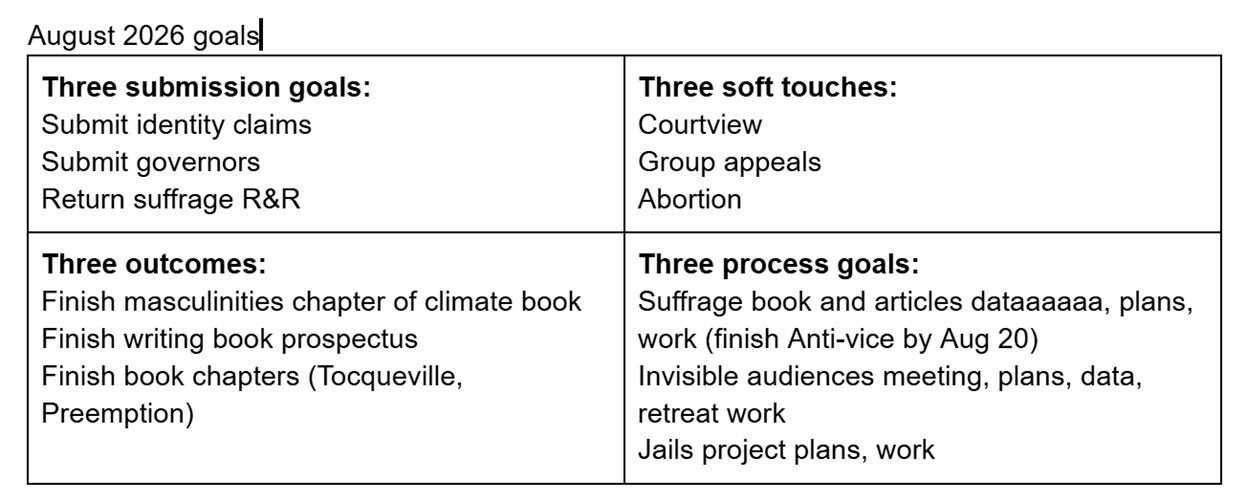
I do this kind of automatically as I’m making my list (i.e., I generally start with projects that have deadlines!) but this is a bit like choosing your favorite child (or picking which kid you dislike the least!).
I have gotten better at this! This is what that list looked in Feb 2020!
Step 5: Go do something else for a little while
This took me about a week to fully come up with after having avoided my monthly goal setting system for a few months. I recommend dividing this shit up over a few days. If you can’t separate it totally apart, at least give yourself a little break. Go touch grass.
Step 6: Break your big things into small pieces
If you know you need to have a conference paper done by Nov 15, then what does that mean for you this month? What are the major pieces (theory done, lit review done, results done, paper edited) that need to happen? Break each larger goal into smaller pieces and then start assigning weeks to each project. If you bristle at setting small goals, think about what it might look like to set smallish goals.
These are flexible guidelines designed to help you think about which projects or parts of projects will get attention each week. You can change them. You can not cross everything off. You can do more than what is on this list. Don’t fucking panic.
Step 7: Shake it up
Don’t set yourself up for failure. Move stuff around so that you have more work on weeks when you have more time and less on weeks where you are, say, planning to go on four separate trips where you won’t be writing at all.
Step 8: USE THESE GOALS
One sure-fire way to absolutely fucking fail at reaching these goals is to do all this shitty work to plan out your month and then put it all away and spend the month on social media complaining about how do you don’t have any time to write. Stop being an asshole. Use your goals to help you.
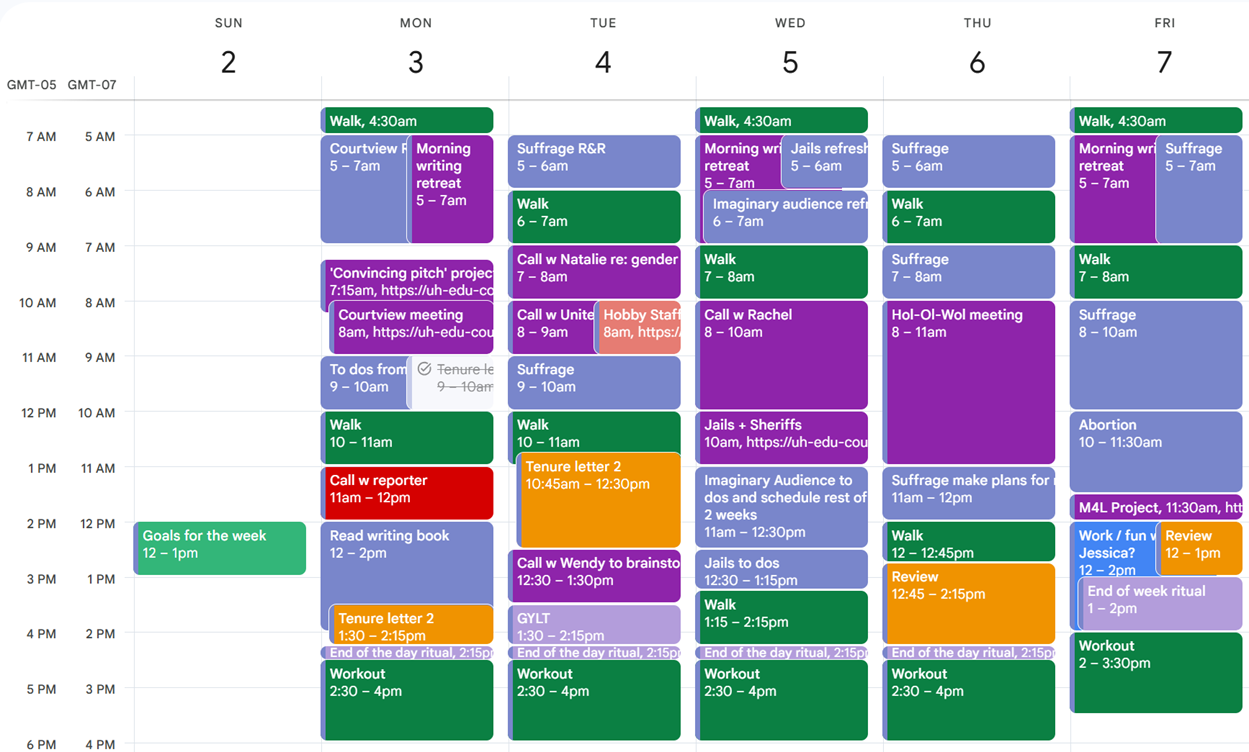
For example, I took these monthly goals and made weekly goals using the weekly goal setting system that I talked about last week! Behold! (or don’t if it makes you panicky) (also, did you know that you can put two time zones onto a google calendar?!?!. Don’t freak out with my 430 am walk — I’m in Oregon and this will be 6:30 by the time I start this week!)
Step 9: Be flexible
Look, shit happens. Stuff comes up. We get sick. We have fun opportunities. Universities suck and suck our time and energy by being fucking assholes. So – adjust your goals. Put some things aside. Write a slightly shittier conference paper. Don’t get to collect data until next month.
But don’t be a true loser. A true loser does this: when one little thing went wrong, they say “the whole thing is fucked” they instead spend the month wondering the hallways of their department, pretending like they are so busy. Don’t be that loser. Practice resilience. Adapt and grow.
Want other options? Check out some other options here or here. Develop your own system. Do whatever you need to do. Let’s get to work.
Sending this to the Synthetic Biology team now. This is perfect! We have so many rolling deadlines and they could be better at managing them.